
The lunchtime scene in large offices often reveals more about a company than any client meeting. You can tell instantly whether the workspace values employee comfort, time efficiency, and nourishment—or just hopes people “manage somehow.”
As more companies in NCR rethink their dining infrastructure, the debate between corporate meal boxes in Noida and traditional cafeterias has intensified. Both serve the same purpose—feeding teams efficiently—but their logistics, costs, flexibility, and impact differ dramatically.
So, which one truly fits the rhythm of modern corporate life? Let’s dive deep into both models, backed by practical experience managing food solutions for workplaces across Delhi NCR.
Why the Choice Between Cafeterias and Meal Boxes Matters
Lunch isn’t just about hunger—it’s cultural. It dictates how your team interacts, how health-conscious your organization is, and even how efficiently your facility operations run.
An ill-planned meal system can cause delays, increase food waste, or worsen employee satisfaction. For HR and admin managers in large offices, the decision is both logistical and emotional: how do you feed hundreds daily without chaos, compromise, or cost overruns?
As someone who has worked closely with cafeteria services in Noida and corporate meal providers like CaterNexa, the answer isn’t simple—but it’s measurable. Let’s compare both models using actual operational parameters.
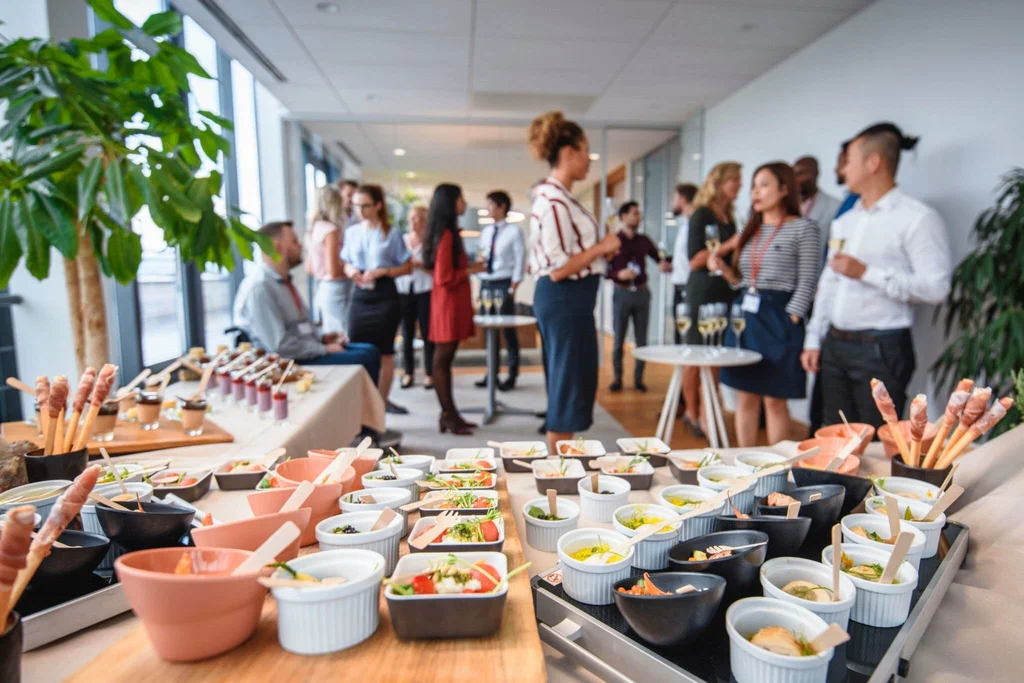
Understanding Both Models Clearly
What Are Corporate Meal Boxes?
Corporate meal boxes in Noida are pre-portioned, hygienically packed meals—delivered ready to eat. They typically arrive just before lunchtime, neatly stacked, labeled, and sealed.
Meal box catering has evolved far beyond basic tiffins—it’s a sophisticated service designed for convenience, hygiene, and controlled portions.
What Are Cafeteria Services?
Cafeteria services in Noida typically serve hot meals at designated dining areas inside office premises. These setups accommodate large employee volumes, offering multiple menu options, live counters, and a shared dining experience.
While they enhance interaction and variety, cafeteria setups require maintenance, constant supervision, and ongoing vendor management.
Choosing Between the Two: Key Considerations
1. Space Requirements
- Cafeteria: Needs dedicated space for counters, seating, and equipment. This suits companies with large campuses or multifunctional workspaces.
- Meal Boxes: Perfect for offices where real estate is tight. Meals arrive pre-packed—no serving areas or kitchen counters required.
Verdict: Workplaces with limited space or shared office floors often benefit from corporate meal boxes.
2. Operational Logistics
Managing meal distribution at scale is both art and science.
- Cafeteria model: Requires staffed counters, kitchen teams, food warmers, and serving protocols.
- Meal box model: Relies on packaging and timely delivery precision. No cooking is done on-site.
Pro Tip: Companies often underestimate the daily workload cafeteria management adds to admin teams—procurement, feedback collection, and oversight all take time.
3. Quality and Hygiene
The biggest employee concern? Food hygiene.
Providers like CaterNexa handle both cafeteria setups and boxed deliveries—but central kitchens still govern safety. Outsourcing to professional partners ensures consistency.
Meal boxes:
- Packed in sterile environments with sealed lids.
- Each box undergoes temperature checks before loading.
- Individual packaging reduces contamination risk.
Cafeteria services:
- Offer fresh-on-counter meals but rely heavily on staff practices and hygiene discipline.
- Require ongoing kitchen maintenance within company premises.
Verdict: Meal boxes offer predictable hygiene. Cafeterias depend more on management vigilance.
4. Menu Variety
Nobody enjoys repeating meals every week.
- Cafeterias can maintain variety through live stations or theme days (Mexican Fridays, Healthy Mondays).
- Meal box catering rotates menus weekly but typically offers fewer choices daily to ensure efficiency.
In large workplaces, variety inspires satisfaction and reduces food fatigue. Cafeterias have the upper hand here—but only if vendors plan menus innovatively.
5. Cost Efficiency
At first glance, cafeteria setups seem cost-effective due to volume-based operations. However, hidden costs like infrastructure, power, maintenance, and manpower often offset savings.
Corporate Meal boxes, on the other hand, operate on per-meal pricing with minimal overhead. Billing remains transparent, and wastage costs are lower due to controlled portions.
| Factor | Cafeteria Services | Corporate Meal Boxes |
| Infrastructure Cost | High | Minimal |
| Maintenance | Continuous | Vendor-managed |
| Portion Control | Varies per employee | Fixed |
| Wastage | Moderate to High | Low |
| Billing Simplicity | Complex | Straightforward |
Verdict: Meal boxes win on cost predictability and scalability.
6. Employee Experience
Food impacts morale. Community dining fosters social bonds, a sense of belonging, and informal team building. Cafeterias provide that shared experience—especially valuable for hybrid and new-age companies rebuilding in-office culture.
Corporate Meal boxes, however, suit workplaces with time-sensitive or shift-based operations. They allow employees flexibility to eat at their desks or during staggered breaks.
Pro Tip: For offices with 70%+ active employee attendance, a cafeteria justifies itself. For hybrid workplaces, Corporate meal boxes are more practical.
Diving Deeper Into Each Model’s Strengths
Cafeteria Services in Noida: Traditional but Transformative
The cafeteria model remains iconic for enterprise-level companies, manufacturing hubs, and technology parks. Done right, it becomes a social anchor.
Benefits
- Engagement: Creates shared spaces where employees interact beyond work.
- Choice: Multiple cuisines and on-demand options satisfy diverse palates.
- Visibility: Employees see preparation and service happening live—boosting trust.
- Customization: Menus adapt to real-time crowd feedback.
Challenges
- Maintenance of kitchen and ventilation systems.
- Ensuring HACCP-standard hygiene compliance.
- Long vendor coordination cycles.
How Experts Manage It
Professional partners design cafeteria ecosystems using predictive consumption data, automation for tracking stock, and cafeteria layout mapping to manage queues.
At CaterNexa, cafeteria teams run like miniature logistics operations—balancing kitchen timing, floor service, and quality checks within 15-minute intervals.
A smart cafeteria is no longer a buffet—it’s a data-driven hub.
Packed Food Services in Noida: A Modern, Compact Alternative
Now, let’s compare with packed food services in Noida, which are redefining how large or hybrid workplaces approach food distribution.
Benefits
- Zero Setup Needed: Meals arrive pre-packed; no installation, kitchen, or staffing costs.
- High Hygiene Factor: Each meal sealed, tracked, and labeled—perfect for sensitive environments.
- Easy Forecasting: Order counts align with attendance data, limiting overproduction.
- Simplified Billing: Transparent per-head costs, ideal for budget control.
Challenges
- Limited menu customization daily.
- Reduced employee interaction compared to cafeterias.
- Dependence on logistics accuracy for punctual deliveries.
Yet for modern offices across Noida’s industrial or IT zones, compact meal-box delivery has become the go-to solution for ensuring consistent nutrition without space or staffing overhead.
Hybrid Solutions: The Best of Both Worlds
Instead of choosing one over the other, some facilities blend both approaches—using cafeteria setups during high-occupancy phases and meal boxes during remote or half-shift days.
How it Works:
- The cafeteria operates as the central kitchen and dining zone.
- During partial occupancy days, meals are pre-packed at the same facility for take-home or desk delivery.
- Employees can pre-select preferences via an app or Google Form, giving the kitchen predictable headcounts.
This “hybrid dining” trend took off after the pandemic, and partners like CaterNexa fine-tuned it to give corporates both control and flexibility.
Health and Nutrition Perspective
No matter the setup, modern employees prefer nutritionally balanced meals that sustain energy without post-lunch fatigue.
With Corporate meal boxes, portion control naturally limits overeating. Boxes are designed with appropriate protein-carb-fat ratios. Cafeterias can, on the other hand, showcase salads, fresh fruits, or protein stations more easily.
Consistency is key. A good vendor focuses on nutrition plans, not just menus — ensuring industrial and tech employees alike receive meals suited to activity levels.
Food Safety and Compliance
Safety standards should never depend on format. Both corporate meal boxes in Noida and cafeterias need:
- FSSAI certifications
- Daily sanitation logs
- Staff health check documentation
- Temperature-controlled storage and delivery systems
Corporate Meal boxes reduce exposure points (less handling), while cafeterias require round-the-clock cleaning.
Transparency earns trust — regular audits, digital feedback systems, and quality testing reinforce confidence in both models.
Sustainability and Waste Management
Modern businesses now weigh environmental impact when structuring meal programs.
Cafeteria services in Noida increasingly adopt steel or reusable crockery instead of disposables, while packed food services in Noida lean toward biodegradable containers and compostable cutlery.
Innovators even collect used packing materials for recycling—closing the loop on meal logistics.
Pro Tip: Choose a vendor that prioritizes eco-conscious sourcing; it will dramatically improve your CSR footprint.
Employee Feedback and Continuous Improvement
Collecting daily feedback forms or digital ratings is vital in understanding satisfaction trends.
- Cafeteria: Use digital kiosks or QR code walls for instant feedback.
- Corporate Meal boxes: Label each box with a QR rating system connecting directly to the admin or vendor dashboard.
When decisions stem from data, change becomes continuous, not reactive.
Use Cases: Where Each Model Works Best
| Workplace Type | Recommended Model | Why It Works |
| IT Parks with high seating capacity | Cafeteria Services | Enhances social dining experience |
| Shared co-working spaces | Corporate Meal Boxes | Minimal infrastructure & quick logistics |
| Factories or field teams | Packed Food Services | Portability & hygiene |
| Hybrid/Remote workforce | Mixed Model | On-demand supply flexibility |
Key Decision Metrics
Before shortlisting a vendor or setup, ask:
- What’s our real estate capacity?
- How variable is attendance?
- What hygiene compliance can we maintain without overstaffing?
- What sustainability expectations do we have?
These questions refine your framework better than generic cost comparisons.
Expert Insight: Transition Planning
If you’re switching from a cafeteria to corporate meal boxes (or vice versa), transition planning is crucial.
- Pilot runs: Test 7–10 days before full deployment.
- Communicate logic: Workers must understand why change benefits them.
- Feedback collection: Track satisfaction metrics post-transition.
- Iterate menus: Early dissatisfaction often comes from limited familiarity.
Handled strategically, transitions boost satisfaction rather than disrupting it.
Beyond Lunch – Expanding the Meal Ecosystem
Corporate dining today extends beyond lunch: evening snacks, weekend shifts, late dinners, and wellness meals are part of the larger employee experience.
Both cafeterias and corporate meal boxes can integrate these seamlessly through thoughtful vendor partnerships. For instance, nutritional “add-ons” (like fruit cups or probiotic drinks) can be pre-packed into boxes or offered at dedicated counters.
Cafeteria Trends: Automation and Analytics
Future-ready cafeterias in Noida now operate with digital dashboards—tracking meal counts, temperature, and billing via integrated apps.
Caterers, including specialists like CaterNexa, combine IoT temperature sensors with analytics dashboards, helping facilities predict demand before rush hours — thereby reducing both cost and waste.
Future Outlook for Large Offices
With remote and hybrid models here to stay, flexibility is the keyword.
Corporate meal boxes in Noida will grow among tech and shared-office environments demanding adaptability. Larger enterprises with established premises will continue optimizing cafeterias through automation, live counters, and customization.
Essentially, both systems will coexist—each playing to specific organizational strengths.
Conclusion: Striking the Right Balance
The choice between corporate meal boxes in Noida and cafeteria services in Noida isn’t about which is universally better—it’s about what best suits your office structure, workforce habits, and operational bandwidth.
Meal boxes excel in hygiene, portability, and consistency. Cafeterias shine in engagement, variety, and culture building. Both, when powered by experienced vendors like CaterNexa, can serve more than meals—they can nurture community, trust, and performance.
As offices evolve, the smartest ones won’t choose one format forever—they’ll choose adaptability. Because feeding employees isn’t just a service—it’s an investment in collective energy, productivity, and well-being.The lunchtime scene in large offices often reveals more about a company than any client meeting. You can tell instantly whether the workspace values employee comfort, time efficiency, and nourishment—or just hopes people “manage somehow.”