
There’s more to feeding employees than simply filling their stomachs. Quality corporate catering helps foster a positive workplace culture, improves productivity, and boosts job satisfaction. However, as a company grows, catering logistics become increasingly complex.
A small startup with 15–20 employees has very different catering needs compared to a multinational corporation with thousands of staff. Yet, both require professional corporate catering services to keep employees satisfied and energized.
This guide explores the differences between small-scale and large-scale corporate catering and how businesses can design effective food strategies based on size, budget, and operational needs.
The Core Differences in Scope and Scale
For small offices, catering is often a personal and occasional experience. For large corporates, it is an operational necessity driven by systems, processes, and speed.
A caterer skilled at gourmet box lunches for board meetings may not be suitable for running a 24-hour cafeteria. Choosing the right partner begins with understanding that corporate catering requirements change dramatically with scale—not just in quantity, but in service style and execution.
Agility and Flexibility for Smaller Offices
Smaller offices with 10–50 employees value agility. Plans can change quickly due to surprise meetings or client visits.
Corporate catering services for small teams must be adaptable. Menu planning is simpler, preferences are easier to track, and decisions are faster.
- Drop-off catering is usually preferred
- No need for on-site service staff
- Focus on food quality and punctual delivery
In these environments, efficiency and taste matter far more than elaborate setups.
Operational Consistency for Large Corporates
Once an organization grows beyond 500 employees, catering becomes a logistics operation rather than a simple lunch order.
Large companies prioritize throughput and consistency. Meals served at noon must taste identical to those served an hour later.
This scale often requires on-site or finishing kitchens with hot food stations, service staff, and strict operational workflows.
Budgeting per Head and Economies of Scale
Despite ordering more food, large corporates often enjoy lower per-head costs due to economies of scale.
Small offices typically pay more per meal because caterers cannot purchase ingredients in bulk.
- Small teams rotate premium and budget meals
- Large companies negotiate long-term contracts
- Stable contracts allow caterers to optimize supply chains
Menu Variety and Dietary Inclusivity
In small offices, dietary needs are easy to manage individually.
In large organizations, caterers must plan statistically. Menus are designed to accommodate vegetarian, vegan, gluten-free, keto, halal, and diabetic diets.
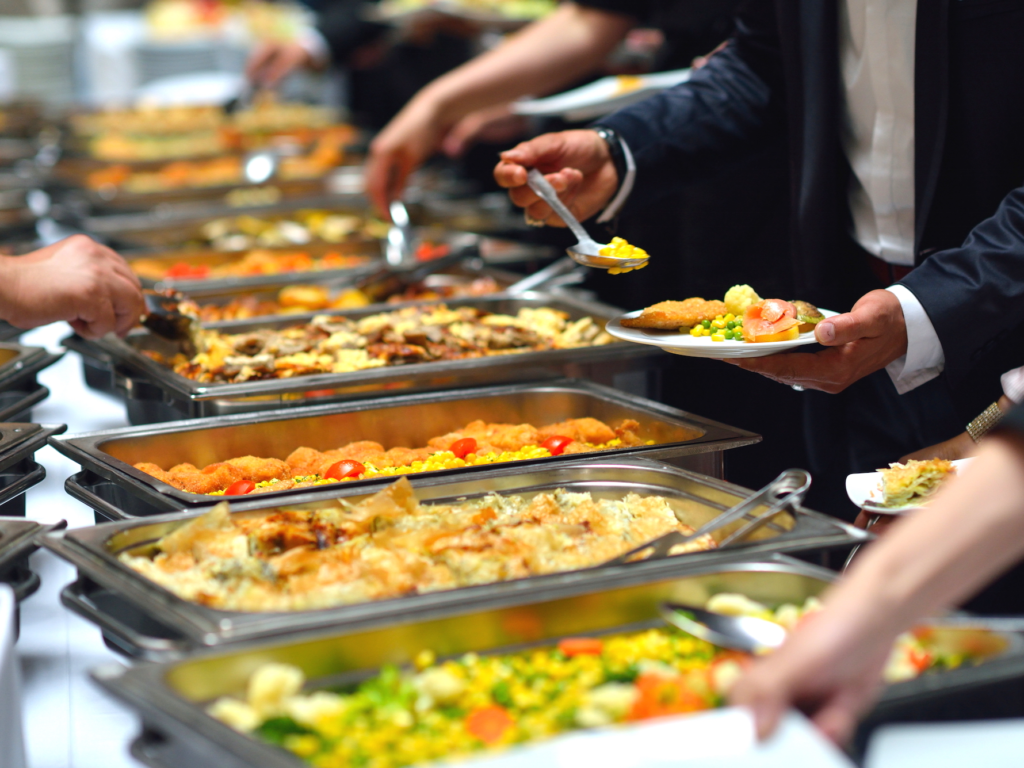
This usually results in buffet-style dining with clearly labeled food stations to ensure safety and inclusivity.
The Role of Cafeteria Management Services in Noida
As business hubs grow, companies increasingly require full-scale cafeteria management services in Noida.
These services go beyond food preparation and include:
- Staffing and counter management
- Cleaning and waste disposal
- Digital payment systems
The corporate catering vendor becomes an extension of daily office operations, responsible for maintaining hygiene, service quality, and employee satisfaction.
Managing Engagement and Preventing Food Fatigue
Food fatigue is a common challenge, especially in large organizations where menus repeat frequently.
Small offices avoid this by rotating vendors or restaurants.
Large corporates rely on creative menu strategies such as:
- Regional food festivals
- Theme-based cuisine weeks
- Live cooking stations
Industrial Catering Services in Noida vs Corporate Offices
Industrial catering services in Noida differ significantly from corporate office catering.
Factory workers require calorie-dense, nutrient-rich meals to support physical labor, often across 24-hour shifts.
Industrial caterers focus heavily on hygiene, safety, and consistent energy supply, while corporate offices prioritize variety, presentation, and dietary preferences.
Technology Integration in Corporate Catering
Technology now plays a key role across all company sizes.
- Small offices use meal-ordering apps to reduce waste
- Large corporates track inventory and collect feedback digitally
Platforms like CaterNexa help businesses of all sizes discover, compare, and book reliable local caterers.
Sustainability and Waste Management
Small offices often struggle with packaging waste, especially during meetings.
To address this, many caterers now offer biodegradable packaging or reusable bento-style boxes.
Large organizations manage waste at scale through composting systems and food redistribution partnerships.
The Importance of Account Management
Small businesses often interact directly with caterer owners or chefs.
Large corporates rely on dedicated account managers who handle contracts, analytics, and issue resolution—ensuring consistent service delivery.
Hygiene Standards and Compliance
Hygiene expectations differ by scale.
Large organizations require:
- FSSAI licenses
- Food safety certifications
- Regular audits and HACCP compliance
These measures minimize risks and protect operational continuity.
Daily Meals vs Event Catering
Daily office meals and event catering require different skill sets.
Small companies may use simple tiffin services for daily meals and premium caterers for festivals or celebrations.
Large corporates often expect one vendor to handle both—though this can be challenging if finesse is required for VIP events.
Personalization and Company Branding
For small businesses, branding may include custom desserts or themed food days.
Large organizations focus on cafeteria design, food presentation, and alignment with brand aesthetics rather than individual menu branding.
Contract Duration and Flexibility
Small businesses benefit from short-term, flexible contracts due to changing headcounts.
Large corporates prefer long-term agreements but require detailed exit clauses to maintain quality assurance.
How to Identify the Right Caterer
- Small offices should request tasting trials
- Large corporates typically use RFP processes
- Aggregators like CaterNexa simplify vendor selection
Feedback Loops and Employee Satisfaction
Feedback is instant in small teams but requires structured systems in large organizations.
QR codes, digital suggestion boxes, and meal ratings help caterers continuously improve service quality.
The Future of Work and Corporate Catering
Hybrid work models have reshaped corporate catering strategies.
Many companies now opt for:
- Full buffets mid-week
- Pre-ordered meals on low-attendance days
This flexibility reduces waste and controls costs across organizations of all sizes.
Conclusion
Whether you manage a small startup or a large corporation, effective corporate catering services are essential to keep teams energized and engaged.
Small offices need flexible, personalized partners. Large corporates require scalable, consistent, and process-driven vendors.
The right catering service aligns with your company culture, budget, and operational needs. When done right, office meals become something employees genuinely look forward to.